Saturated vs Unsaturated Fats: The Difference That Matters
One chemical bond separates butter from olive oil. What that difference does to your cholesterol, which foods sit on each side, and the swap that actually lowers risk.
Contents
Saturated and unsaturated fats differ by one thing: whether the fatty acid chain contains double bonds. Saturated chains have none, pack together tightly and stay solid at room temperature — butter, cheese fat, coconut oil. Unsaturated chains are kinked by their double bonds, cannot pack, and pour — olive oil, sunflower oil, the fat in nuts and fish. That structural difference translates directly into what the fat does to your LDL cholesterol, and the practical conclusion is narrower than the headlines suggest: what matters is not how much saturated fat you cut, but what you put in its place.
The difference is one chemical bond
A fatty acid is a chain of carbon atoms with a acid group at one end. Each carbon can hold hydrogen atoms, and the question is whether it is holding as many as it possibly can.
Saturated means exactly that: every carbon is saturated with hydrogen, there are no double bonds between carbons, and the chain is straight. Straight chains stack against each other like pencils in a box, which is why a stick of butter holds its shape.
Monounsaturated means one double bond. At that bond the chain bends by roughly 30 degrees, and bent chains cannot stack neatly. Olive oil is liquid on the counter for this reason — and thickens in the fridge, because the loose packing still gives way at low temperatures.
Polyunsaturated means two or more double bonds and correspondingly more kinks. Sunflower, flaxseed and fish oils stay liquid even when chilled. The same double bonds are also chemically reactive, which is why polyunsaturated oils go rancid faster and should not be stored above the stove or heated hard.
Which foods sit on each side
The room-temperature rule works most of the time, with two exceptions worth memorising: coconut and palm oil are plant fats that are heavily saturated, and partially hydrogenated oils are trans fats masquerading as vegetable oil.
| Food | Total fat, g/100 g | Saturated | Unsaturated |
|---|---|---|---|
| Coconut oil | 100 | ~87 g | ~13 g |
| Butter | 81 | ~51 g | ~28 g |
| Palm oil | 100 | ~49 g | ~46 g |
| Cheddar | 33 | ~21 g | ~11 g |
| Lard | 100 | ~39 g | ~56 g |
| Egg (whole) | 10 | ~3 g | ~5.5 g |
| Olive oil | 100 | ~14 g | ~84 g (73 g mono) |
| Sunflower oil | 100 | ~11 g | ~83 g (63 g poly) |
| Canola (rapeseed) oil | 100 | ~7 g | ~91 g |
| Almonds | 50 | ~4 g | ~43 g |
| Walnuts | 65 | ~6 g | ~56 g (47 g poly) |
| Avocado | 15 | ~2 g | ~12 g |
| Salmon | 13 | ~3 g | ~9 g (2.3 g omega-3) |
Read the table by ratio rather than by absolute numbers. Lard and butter are both animal fats, but lard is under 40% saturated while butter is over 60%. Salmon carries a comparable amount of total fat to a hard cheese portion and a completely different composition. And nuts, which people avoid as "fatty", are among the most unsaturated foods on the list.
Читайте также: Dietary Fats: Saturated, Unsaturated and Trans Explained
What each type does to your cholesterol
This is the mechanism that everything else rests on, and it is not complicated.
Your liver clears LDL particles from the blood using LDL receptors on its surface. Saturated fatty acids — specifically palmitic, myristic and lauric acid — reduce the expression and activity of those receptors. Fewer receptors means slower clearance, and slower clearance means LDL accumulates in the circulation. Unsaturated fatty acids do not suppress the receptors, so replacing one with the other lets clearance recover.
The size of the effect has been quantified precisely, because it can be measured in controlled feeding studies where every meal is provided. The meta-analysis of 60 controlled trials by Mensink and colleagues (2003), whose regression coefficients still underpin the modelling behind current guidelines, produced usable numbers: replacing 1% of daily energy from saturated fat with polyunsaturated fat lowers LDL cholesterol by roughly 0.055 mmol/L (about 2 mg/dL), and with monounsaturated fat by roughly 0.045 mmol/L. Replacing it with carbohydrate lowers LDL less and raises triglycerides while lowering HDL.
Scaled up, a realistic dietary shift of 5% of energy — swapping a daily portion of butter and cheese for olive oil and nuts — moves LDL by something like 0.2–0.3 mmol/L. That is a modest number for one person and a large one across a population.
Читайте также: Cholesterol Explained: LDL, HDL and What the Numbers Mean
The comparison only means something as a swap
Here is where most reporting on this subject goes wrong. "Is saturated fat bad?" has no answer, because a nutrient never leaves a diet without something arriving to replace its calories. The right question is always: instead of what?
The Cochrane review led by Hooper and colleagues in 2020 pooled randomised trials in which people cut saturated fat for at least two years. Overall, cardiovascular events fell by about 17%. But when the reviewers split the trials by what the saturated fat was replaced with, the benefit sat almost entirely in the trials that substituted polyunsaturated vegetable oils. Where carbohydrate or protein took its place, no convincing effect appeared. Total mortality did not shift in any scenario.
Li and colleagues found the same pattern in free-living diets in their 2015 analysis of two large prospective cohorts in the Journal of the American College of Cardiology. Replacing 5% of energy from saturated fat lowered coronary heart disease risk by roughly:
- 25% when polyunsaturated fat replaced it;
- 15% when monounsaturated fat replaced it;
- 9% when whole grains replaced it;
- nothing measurable when refined carbohydrate and sugar replaced it.
That last line explains the entire low-fat era. Through the 1980s and 1990s people dutifully cut fat, and the food industry replaced it with sugar and starch — the one substitution the data show does nothing. The diets changed and the outcomes did not, which is exactly what these numbers predict.
Читайте также: How Much Sugar Per Day: Limits and Hidden Sources
Not all saturated fats are the same
The category "saturated fat" bundles together fatty acids that behave differently, and the differences are large enough to matter.
Stearic acid (C18:0) is the main saturated fatty acid in cocoa butter and a large share of beef fat. Unlike its shorter relatives, it does not meaningfully raise LDL — the liver converts much of it to oleic acid, a monounsaturated fatty acid. This is one reason dark chocolate does not behave in trials the way its saturated fat content would predict.
Palmitic (C16:0) and myristic (C14:0) acid are the LDL-raising members of the family, and they dominate in palm oil, butterfat and fatty meat. Myristic acid has the strongest effect per gram.
Lauric acid (C12:0) makes up about half of coconut oil. It raises LDL substantially, and also HDL, which is the origin of the "coconut oil improves your ratio" claim. The total-to-HDL ratio does improve slightly, but LDL — the causal particle — goes up, and the 2017 AHA advisory names coconut oil explicitly among fats to avoid as a primary cooking fat.
There is also the food matrix. The 2020 JACC review by Astrup and colleagues made the case that saturated fat behaves differently depending on the food carrying it: cheese and yoghurt are not associated with the cardiovascular risk their saturated fat content would predict, while processed meat is associated with more risk than its fat alone explains. Calcium, fermentation, protein structure and salt all appear to modify the effect. That review is a live debate rather than settled consensus, and the WHO's 2023 guideline deliberately kept a single nutrient-based limit rather than food-specific ones. The practical takeaway is modest but real: plain yoghurt and cheese are not the same problem as sausage, even at equal saturated fat.
What this looks like on a plate
The whole subject reduces to a short list of substitutions, each of which has been tested.
| Instead of | Use | Why |
|---|---|---|
| Butter for cooking | Olive or canola oil | Saturated fat falls from ~63% to 14% or 7% of the fat |
| Butter on bread | Avocado, hummus, nut butter | The swap trials tested here are exactly the ones that showed benefit |
| Coconut oil as an everyday fat | Any liquid vegetable oil | Coconut is more saturated than butter or lard |
| Fatty sausage and processed meat | Poultry, fish, legumes | Both the fat profile and the matrix improve |
| Crisps and biscuits as a snack | Nuts, a handful | Trades saturated and refined starch for unsaturated fat and fibre |
| Low-fat flavoured yoghurt | Plain yoghurt, full or low fat | Avoids the fat-for-sugar swap that achieves nothing |
| A second meat meal in the week | Oily fish | Adds EPA and DHA, which nothing else in the diet supplies |
Читайте также: Omega-3 Supplements: How to Choose One That Works
What to actually do
- Make a liquid vegetable oil your default fat. Olive oil for dressings and everyday cooking, refined olive or canola for higher heat. This single change does more than any amount of label reading.
- Keep saturated fat bounded, not banished. Under 10% of energy — about 22 g a day on 2,000 kcal, or 15 g if your LDL is elevated. Cheese, butter and fatty meat all fit; all three on the same day generally do not.
- Watch what fills the gap. Removing butter and adding jam is not progress. Nuts, olive oil, oily fish, avocado and legumes are the replacements the trials rewarded.
- Treat coconut oil as a flavour, not a health food. It is the most saturated fat in a normal kitchen.
- Read the ingredient list for "partially hydrogenated". Trans fat is a separate and worse category, and it hides in pastry, coatings and cheap frying fat rather than announcing itself on the nutrition panel.
- Eat oily fish twice a week. Mackerel, herring and sardines are cheap and deliver the omega-3 fatty acids that no vegetable oil provides in usable form.
Reduced to a sentence: the fat you remove matters far less than the fat you put in its place. Once you stop asking which foods are forbidden and start asking what replaces them, the apparent contradictions in this field mostly disappear.
FAQ
What is the difference between saturated and unsaturated fat?+
The number of double bonds in the fatty acid chain. Saturated fatty acids have none — the chain is straight, molecules pack tightly, and the fat is solid at room temperature. Unsaturated fatty acids have one (monounsaturated) or several (polyunsaturated) double bonds that kink the chain, keep it from packing, and leave the fat liquid. That single structural difference drives most of what follows, including the effect on LDL cholesterol.
Which is worse, saturated or unsaturated fat?+
Saturated fat raises LDL cholesterol; unsaturated fat lowers it when it takes saturated fat's place. But the comparison only means something as a swap. Replacing saturated fat with polyunsaturated fat cuts coronary heart disease risk by around a quarter in cohort data; replacing it with sugar and refined starch changes nothing at all.
How can I tell saturated from unsaturated fat in the supermarket?+
The room-temperature rule gets you most of the way: fat that is solid at room temperature — butter, lard, cheese fat, coconut and palm oil — is mostly saturated, and fat that pours is mostly unsaturated. The two exceptions worth remembering are coconut and palm oil, which are plant fats but highly saturated, and anything with 'partially hydrogenated' on the label, which is unsaturated in name only.
Are all unsaturated fats healthy?+
No. Industrial trans fats are unsaturated by chemical definition — they simply have their double bonds in the trans configuration, which makes the chain behave like a saturated one. They raise LDL and lower HDL simultaneously and have no safe intake level. 'Unsaturated' on its own is not a health claim.
Is butter or olive oil better?+
Olive oil, if you are choosing which one to build meals around. Butter is about 63% saturated fat, olive oil about 14%, and controlled feeding trials consistently show olive oil produces lower LDL. That is an argument about defaults, not about banning butter: 10 g of butter on toast is not the problem, 10 g of butter at every meal is.
How much saturated fat should I eat per day?+
The WHO's 2023 guideline caps saturated fat at 10% of daily energy — roughly 22 g on a 2,000 kcal diet — and 7%, about 15 g, for people with elevated LDL or established cardiovascular disease. For scale, 45 g of cheddar plus a knob of butter uses most of a day's allowance.
References
- 1.WHO. Saturated fatty acid and trans-fatty acid intake for adults and children: WHO guideline (2023)
- 2.Mensink RP, Zock PL, Kester ADM, Katan MB. Effects of dietary fatty acids and carbohydrates on the ratio of serum total to HDL cholesterol and on serum lipids and apolipoproteins: a meta-analysis of 60 controlled trials. Am J Clin Nutr, 2003
- 3.Hooper L, Martin N, Jimoh OF et al. Reduction in saturated fat intake for cardiovascular disease. Cochrane Database of Systematic Reviews, 2020
- 4.Li Y, Hruby A, Bernstein AM et al. Saturated Fats Compared With Unsaturated Fats and Sources of Carbohydrates in Relation to Risk of Coronary Heart Disease. J Am Coll Cardiol, 2015
- 5.Sacks FM, Lichtenstein AH, Wu JHY et al. Dietary Fats and Cardiovascular Disease: A Presidential Advisory From the American Heart Association. Circulation, 2017
- 6.Astrup A, Magkos F, Bier DM et al. Saturated Fats and Health: A Reassessment and Proposal for Food-Based Recommendations. J Am Coll Cardiol, 2020
Read next
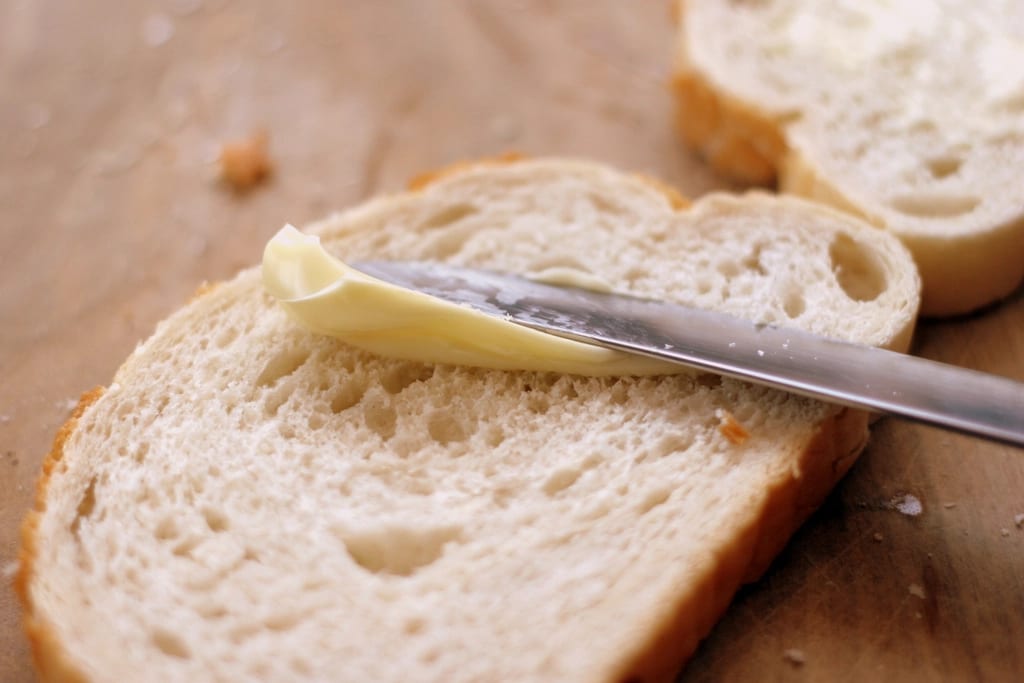
Trans Fat vs Saturated Fat: What's the Difference?
Both are 'bad fats', but they are not in the same category. Trans fat moves LDL and HDL in opposite directions and has no safe level; saturated fat depends entirely on what replaces it.

Dietary Fats: Saturated, Unsaturated and Trans Explained
What fats actually do in the body, how saturated, mono- and polyunsaturated fats differ, why trans fats have no safe level, and how much fat you need per day.
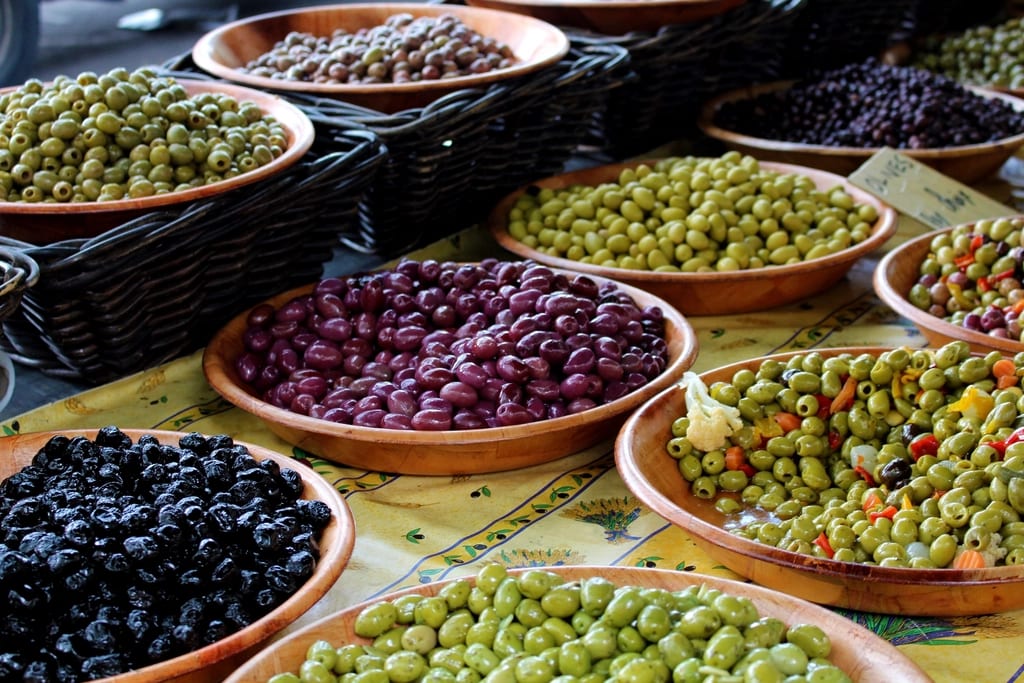
The Mediterranean Diet: What It Actually Is and How to Build It
The most studied eating pattern in the world: the PREDIMED evidence, what the diet contains, a weekly framework, and how to adapt it to an ordinary supermarket and budget.