Fermented Foods: What the Science Says About Your Gut
Yogurt, kefir, sauerkraut and kimchi: how fermentation affects your microbiota and inflammation, which products to choose, and how they differ from probiotic capsules.
Contents
Fermented foods are yogurt, kefir, sauerkraut, kimchi and other products transformed by live microbes. In a controlled Stanford trial published in 2021, a diet with 4–6 servings of these foods a day raised gut microbiota diversity over 10 weeks and lowered 19 inflammatory markers in the blood. A high-fiber diet did not produce that effect. It is one of the first direct pieces of evidence that fermented food affects not just digestion but the immune system.
What fermentation actually is
Fermentation is an ancient way of preserving food in which microorganisms convert one set of compounds into another in the absence or limitation of oxygen. Most often the workers are lactic acid bacteria (the Lactobacillus, Leuconostoc and related genera) and yeasts. They feed on the sugars in the food and release lactic acid, alcohol, carbon dioxide and a host of other compounds.
That lactic acid gives sauerkraut and kefir their characteristic tang and simultaneously preserves the food: pathogens cannot survive in an acidic environment. This is how people stored vegetables, milk and fish without refrigeration for millennia. A side effect of that storage is a whole array of bioactive substances that were not in the raw ingredient.
By the definition of the international ISAPP association, fermented foods are "foods made through desired microbial growth and enzymatic conversions of food components." One important detail: not every fermented food still contains live cultures by the time you eat it.
Live cultures versus pasteurization
This is the single practical point that decides whether a product "works" from a microbiota standpoint. Live cultures are sensitive to heat. Pasteurization — heat treatment to extend shelf life and improve safety — kills bacteria. Vinegar does the same: a jar of vinegar pickles is tasty, but it is pickled, not fermented.
How to tell them apart:
| Signal | Live cultures present | Probably dead |
|---|---|---|
| Where it sits in store | In the refrigerator | On a shelf at room temperature |
| Ingredients | Cabbage/vegetables, salt, water | Contains vinegar, often sugar and preservatives |
| Label | 'Unpasteurized', 'live cultures' | 'Pasteurized' or no note |
| Shelf life | Weeks, needs refrigeration | Many months at room temperature |
| Brine appearance | Cloudy, may fizz | Clear, stable |
The practical takeaway: homemade sauerkraut and refrigerated unpasteurized kimchi carry live cultures, while a sterilized, long-shelf-life jar almost certainly does not. Choose yogurt labeled with live and active cultures rather than a "heat-treated" version.
Читайте также: Gut microbiome basics: how it works and what shapes it
The Stanford 2021 data: diversity and inflammation
The most-cited study on the topic is the work of Wastyk and colleagues, published in Cell in 2021. Researchers split healthy adults into two groups for 10 weeks. One increased fiber (vegetables, legumes, whole grains); the other increased fermented foods (yogurt, kefir, cultured cottage-cheese drinks, vegetable ferments, kombucha), building up to 4–6 servings a day.
The results were surprising:
- Microbiota diversity rose only in the fermented-food group. Diversity — the number of different bacterial species — is considered a marker of a resilient, "healthy" gut community. In the fiber group it did not change on average.
- Inflammation dropped: 19 inflammatory blood proteins, including interleukin-6, fell — again only in those eating fermented food. Chronic low-grade inflammation is linked to cardiovascular, metabolic and autoimmune disease.
- Fiber behaved differently: it did not raise diversity over 10 weeks, though in some people it increased the activity of microbiota enzymes. The authors suggested fiber may need a more diverse starting microbiome, or more time, to show an effect.
Don't overstate it, though: 4–6 servings a day is an experimental protocol, not an everyday recommendation. And lower inflammatory markers in blood are not the same as a proven reduction in the risk of specific diseases. This is an intermediate, if encouraging, result.
How fermented food may act
The mechanisms are still being worked out, but researchers point to several plausible pathways that probably operate together.
The first is the live microbes themselves. Some bacteria from kefir and ferments survive the stomach and settle in the gut temporarily, competing with less desirable species and supporting the mucosal barrier. "Temporarily" is the key word: most food microbes do not take up permanent residence, which is why the effect requires regular intake.
The second is the metabolites the microbes already produced in the jar. Fermentation accumulates short-chain fatty acids, bioactive peptides and some B and K vitamins, while the original proteins and sugars end up partly "pre-digested." This is why many people tolerate cultured dairy better than whole milk: a large share of the lactose has already been broken down by the cultures.
The third is an effect on your own microbiota. Even cells killed during digestion, their fragments and the organic acids alter the gut environment and feed the beneficial species already living there. The Stanford authors suggest the rise in diversity is explained less by "colonization" with new bacteria than by a shift in conditions for the resident community.
None of these pathways reduces to a single "good bacterium": what works is the combination of live cultures, their products and the nutritional matrix of the food itself. That is what separates food from an isolated strain in a capsule.
How this differs from probiotic capsules
A probiotic, by the WHO definition, is "live microorganisms that, when administered in adequate amounts, confer a health benefit on the host." Formally fermented foods and supplements overlap, but in practice they differ fundamentally.
| Parameter | Fermented food | Probiotic capsule |
|---|---|---|
| Microbial makeup | Complex community of dozens of species | 1–2 defined strains |
| Dose | Variable, not stated | Stated in CFU per serving |
| What else is inside | Metabolites, peptides, vitamins, acids | Usually just bacteria and filler |
| Nutritional value | Protein, calcium, fiber | Essentially none |
| Evidence base | Growing, but for food as a whole | For specific strains and conditions |
The key difference: a capsule gives you a known dose of a specific strain studied for a specific job (for example, antibiotic-associated diarrhea). A fermented food gives you an entire microbial community plus its by-products: short-chain fatty acids, bioactive peptides, B and K vitamins, partially broken-down proteins. That "sum" may explain an effect that a single strain lacks.
For most healthy people, fermented foods are a more sensible and cheaper starting point than supplements. Capsules make sense where there is evidence for a specific strain and condition.
Читайте также: Probiotics: what is actually proven and what is marketing
Which products to choose
Not all fermented foods are equal. Favor the ones that reach you with live cultures.
- Kefir — one of the most microbially diverse products, carrying both bacteria and yeasts. A daily glass is a simple baseline habit.
- Yogurt — choose one labeled with live and active cultures and without excess sugar. Greek yogurt adds more protein.
- Sauerkraut — unpasteurized, refrigerated, with only cabbage, salt and spices in the ingredients, no vinegar.
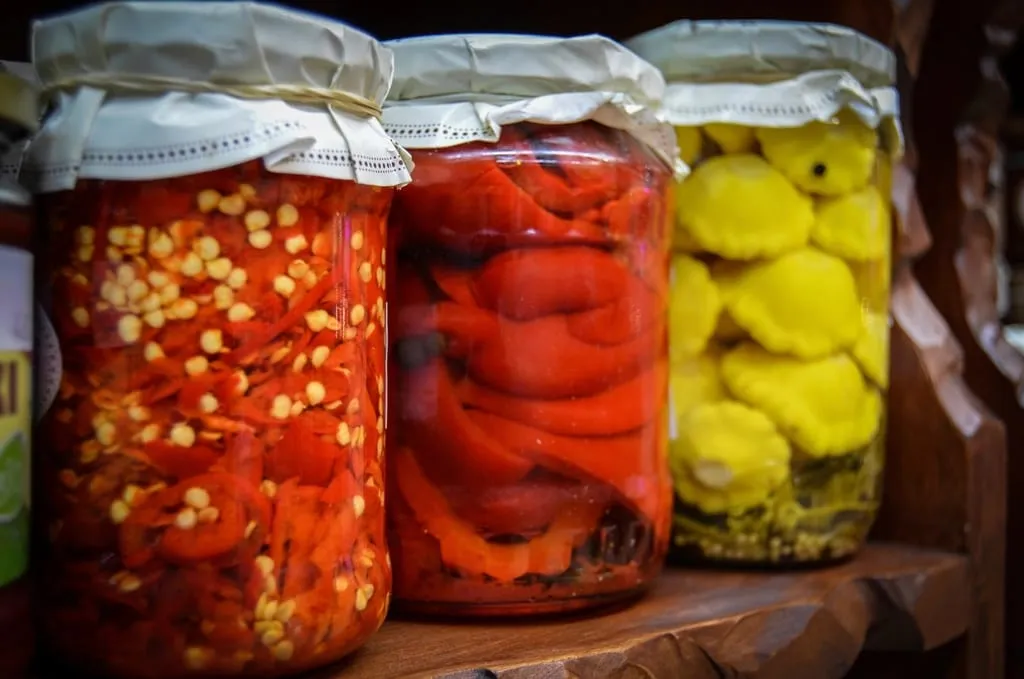
- Kimchi — fermented vegetables with wide microbial diversity; again, look for refrigerated and unpasteurized.
- Kombucha — contains cultures but often plenty of sugar; read the label.
- Miso and tempeh — fermented soy; don't boil miso, to preserve the cultures.
A second caution is histamine. Fermentation produces biogenic amines, including histamine; people with histamine intolerance may react to aged products with headache, flushing or itching. And with pronounced immunodeficiency, the live cultures in unpasteurized foods are theoretically risky — in those cases talk to a clinician.
What to do
A practical plan to get the benefit without the extremes:
- Start with one serving a day. A glass of kefir at breakfast or a couple of spoonfuls of sauerkraut at lunch. Jumping to a large volume often causes bloating — your microbiota needs time to adapt.
- Check for "live cultures." Buy refrigerated products labeled with live cultures, without vinegar or added sugar in the ingredients.
- Vary your sources. Kefir, yogurt, sauerkraut and kimchi supply different microbial communities — rotate them rather than eating the same thing.
- Build up to 1–2 servings. That is a realistic everyday goal; you don't need to sustain the study's 4–6 servings.
- Watch the salt. Count ferments toward your daily sodium, especially with elevated blood pressure.
- Don't use them as treatment. Fermented food is part of a healthy diet, not therapy for specific diseases. For gut symptoms and chronic conditions, make decisions with your clinician.
Fermented foods are a rare case where a simple, cheap and tasty habit is backed by solid experimental evidence of benefit to the microbiota and immune system. Their power is not in a single "superbug" but in diversity — of microbes and of the foods on your plate.
FAQ
Are fermented foods and probiotic capsules the same thing?+
No. A capsule contains one or two defined strains at a known dose, while a fermented food is a complex community of microbes plus the compounds they produce. In Stanford's 2021 trial it was the fermented-food diet, not fiber, that raised microbiota diversity and lowered inflammatory markers.
Does shelf-stable sauerkraut work the same as unpasteurized?+
Usually not. Long shelf-life jars are typically pasteurized or made with vinegar, so they contain no live cultures. Look for refrigerated jars labeled 'unpasteurized' with no vinegar in the ingredients.
How many servings of fermented food per day?+
Stanford's effect appeared at 4–6 servings a day, but that was an experimental protocol. A sensible everyday goal is 1–2 servings a day (a glass of kefir, a few spoonfuls of sauerkraut or kimchi), built up gradually.
Who should be cautious with fermented foods?+
People with severe immunodeficiency, histamine intolerance, and those on low-sodium diets for high blood pressure, since ferments are salty. In these situations discuss your diet with a clinician.
References
- 1.Wastyk HC, et al. Gut-microbiota-targeted diets modulate human immune status. Cell, 2021
- 2.Marco ML, et al. The ISAPP consensus statement on fermented foods. Nature Reviews Gastroenterology & Hepatology, 2021
- 3.Marco ML, et al. Health benefits of fermented foods: microbiota and beyond. Current Opinion in Biotechnology, 2017
- 4.Dimidi E, et al. Fermented Foods: Definitions and Characteristics, Impact on the Gut Microbiota and Effects on Gastrointestinal Health and Disease. Nutrients, 2019
- 5.WHO/FAO. Guidelines for the Evaluation of Probiotics in Food, 2002
Read next
Prebiotics vs Probiotics: The Difference and What Actually Works
How prebiotics differ from probiotics, who supplements genuinely help, who is better off with food, and why a probiotic's effect depends on the strain.
Probiotics: What Is Proven and What Is Just Sold
Strain specificity, CFU labelling, the 2018 trials that reversed the pediatric gastroenteritis story, and when probiotics are genuinely dangerous.
Leaky Gut Syndrome: What Is True and What Is Marketing
Intestinal permeability is real physiology, but 'leaky gut syndrome' as the cause of every illness is not established. Here is where the science ends and the supplement sales begin.

Gut Microbiome Basics: What It Is and How to Care for It
The gut microbiome is trillions of bacteria that feed on fiber and make compounds we need. Here is what genuinely shapes it — and what is just marketing.
IBS and the FODMAP Diet: What It Is and Who It Helps
How irritable bowel syndrome is diagnosed, what FODMAP carbohydrates are, how the three-phase diet works, and why it must never become a permanent way of eating.

Lactose Intolerance: How to Tell and What to Do About It
How lactose intolerance differs from milk allergy, why most adults on the planet have it, how to test for it, and why cutting out dairy completely is usually unnecessary.