Calcium: How Much You Need and How to Get It Without Dairy
Calcium requirements by age, the best dairy and plant sources, why vitamin D and protein matter, and who actually needs a supplement rather than taking one just in case.
Contents
Calcium is the most abundant mineral in the body: about 99 % sits in bones and teeth, the rest works in blood, muscle and nerves. The crucial detail is that blood calcium is held rigidly stable — when the diet falls short, the body simply draws on bone. So a "normal calcium" result on a blood test tells you nothing about whether your diet supplies enough. Judge by intake, not biochemistry.
Requirements by age
| Group | Calcium, mg/day | Why |
|---|---|---|
| Children 4–8 | 1000 | Rapid skeletal growth |
| Teenagers 9–18 | 1300 | Building peak bone mass |
| Adults 19–50 | 1000 | Maintaining bone mass |
| Women 51–70 | 1200 | Accelerated bone loss after menopause |
| Men 51–70 | 1000 | Loss proceeds more slowly |
| Everyone over 70 | 1200 | Reduced absorption and fracture risk |
| Pregnancy and lactation | 1000 (1300 if under 18) | Fetal needs met by increased absorption |
What matters is not only today's intake but the reserve banked by age 25–30. Roughly 90 % of bone mass forms before 20, with peak reached around 30. After that a slow decline begins that can be slowed but not reversed. Hence the practical point: a teenager's calcium-rich diet is a lifetime investment in the skeleton, and after 50 the goal shifts from building to losing more slowly.
Where to get it
Sources differ several-fold in density — and in bioavailability. About 30 % of calcium in dairy is absorbed; from brassicas (broccoli, kale, bok choy) up to 50–60 %; from spinach, under 5 % because of oxalates.
| Food | Portion | Calcium, mg |
|---|---|---|
| Plain yoghurt | 200 g | 240–300 |
| Milk | 200 ml | 240 |
| Hard cheese | 30 g | 200–240 |
| Cottage cheese | 150 g | 180 |
| Fortified plant drink | 200 ml | 240 (check the label) |
| Calcium-set tofu | 100 g | 200–350 |
| Canned sardines with bones | 80 g | 270 |
| Sesame seeds / tahini | 30 g | 290 / 130 |
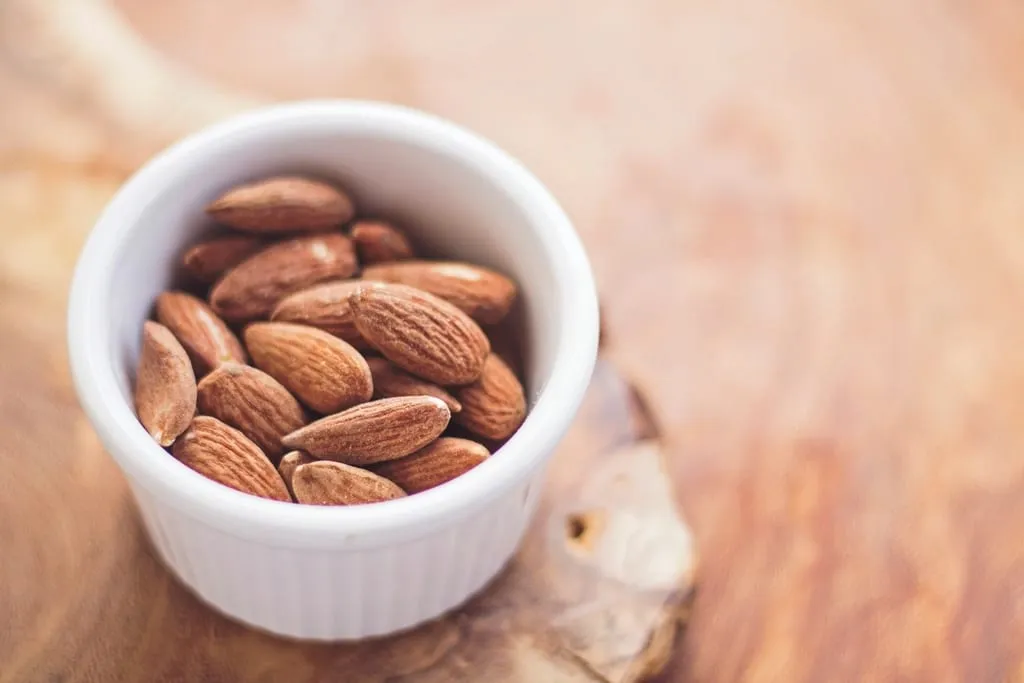
| Almonds | 30 g | 75 |
| Cooked broccoli | 150 g | 60 |
| Cooked white beans | 150 g | 90 |
| Bread from fortified flour | 2 slices | 60–100 |
The arithmetic is easier than it looks. A pot of yoghurt at breakfast, 30 g of cheese at lunch and a glass of milk or fortified drink in the evening already covers roughly 700 mg. The rest accumulates quietly from bread, vegetables, nuts and beans. If dairy is absent entirely, fortified drinks, tofu and sesame become the load-bearing foods — and it's worth tallying one typical day to see where you stand.
Vitamin D and protein: calcium doesn't work alone
Intestinal calcium absorption is governed by the active form of vitamin D. When it is deficient, only 10–15 % of ingested calcium is absorbed; at adequate levels, 30–40 %. Pushing calcium up while vitamin D is low is pouring water into a leaking bucket.
Читайте также: Vitamin D: Levels, Dosage and Who Actually Needs a Supplement
The second underrated factor is protein. It was long assumed that a high-protein diet leached calcium from bone through acid load. Current evidence overturns that: with adequate calcium, protein improves bone density and lowers fracture risk, because it maintains muscle mass and stimulates bone formation. This matters most after 60, when sarcopenia and osteoporosis together sharply raise the risk of falls and fractures.
Читайте также: Muscle Mass and Aging: How Not to Lose It
The third factor is loading. Bone remodels in response to mechanical stress. Strength training and impact activity — walking, running, jumping, dancing — stimulate osteoblasts far more than any mineral in a capsule. Swimming and cycling are excellent for the heart but do little for bone.
Читайте также: Strength Training for Beginners: Programming and Technique
Who needs a supplement
The logic is simple: count the food, then close the gap. If your diet supplies 700 mg and the target is 1000, you need 300 mg, not 1000.
| Situation | What to do |
|---|---|
| Dairy most days | Supplement usually unnecessary |
| No dairy and no fortified products | Tally your intake; 300–500 mg likely needed |
| Osteoporosis or osteopenia | Calcium + vitamin D as prescribed |
| Taking glucocorticoids | Bone protection managed with your doctor |
| After bariatric surgery | Calcium citrate, split doses, lifelong |
| Menopause | Target 1200 mg; prioritise food, strength training, vitamin D |
Forms differ. Calcium carbonate is cheaper and higher in elemental calcium (40 %), but needs stomach acid, so take it with food; it also causes constipation and bloating more often. Calcium citrate provides 21 % elemental calcium, absorbs regardless of gastric acidity, and suits people on proton pump inhibitors or after gastric surgery.
The key dosing rule: no more than 500–600 mg is absorbed at once. A single 1000 mg tablet is mostly wasted money and extra gut load. Split the dose across two servings with food.
What blocks absorption
- Oxalates (spinach, sorrel, rhubarb, beet greens) bind calcium tightly. That doesn't make spinach bad — just don't count it as a calcium source.
- Phytates (whole grains, legumes, nuts) reduce absorption moderately; soaking, sprouting and fermentation partly break them down.
- Excess sodium increases urinary calcium loss — roughly 20–40 mg of calcium per extra gram of salt.
- Caffeine has only a small effect, offset by adding milk to coffee.
- Alcohol in large amounts suppresses bone formation and raises fall risk.
Читайте также: Salt: How Much Per Day and How to Cut It Painlessly
The bottom line
Adults need 1000 mg of calcium a day; women after 50 and everyone after 70, 1200 mg. A blood calcium test won't reveal a dietary shortfall, so judge by what you eat: dairy is the densest source, and without it the job is done by fortified drinks, tofu, sardines with bones, sesame and brassicas. Calcium only works alongside vitamin D, adequate protein and mechanical loading. Supplements are not universal — size them as the gap between target and plate, split the dose, and stay under the upper limit.
FAQ
How much calcium do I need per day?+
Adults aged 19–50 need about 1000 mg a day. Women over 50 and everyone over 70 need 1200 mg. Teenagers aged 9–18 need 1300 mg, because peak bone mass is built during those years.
Can I get enough calcium without dairy?+
Yes, but it takes attention. Fortified plant drinks, calcium-set tofu, canned sardines with bones, sesame and tahini, almonds, broccoli, kale and legumes all work. Spinach and sorrel look calcium-rich on paper, but oxalates block almost all absorption.
Do I need a calcium supplement?+
Most people getting 700–1000 mg from food do not. Supplements make sense with demonstrably low intake, osteoporosis, glucocorticoid treatment, or after bariatric surgery. The dose should close the gap between your intake and the target, not add 1000 mg on top.
Is it true calcium supplements harm the arteries?+
The evidence is mixed. Some analyses found a small increase in cardiovascular risk with high-dose supplements, while dietary calcium showed no such signal. That is one more argument for food as the primary source and modest supplement doses only when there is a real shortfall.
Why does calcium need vitamin D?+
Without vitamin D, only 10–15 % of dietary calcium is absorbed; with adequate levels, 30–40 %. So raising calcium while vitamin D is low achieves little — fix the D first.
References
- 1.NIH Office of Dietary Supplements. Calcium — Health Professional Fact Sheet
- 2.EFSA Panel on Dietetic Products. Scientific Opinion on Dietary Reference Values for calcium. EFSA Journal, 2015
- 3.Weaver CM et al. Calcium plus vitamin D supplementation and risk of fractures: an updated meta-analysis. Osteoporos Int, 2016
- 4.Bolland MJ et al. Calcium intake and risk of fracture: systematic review. BMJ, 2015
- 5.Groenendijk I et al. Impact of magnesium and calcium on bone health. Ageing Res Rev, 2019
Read next

Osteoporosis: The Prevention That Starts in Your Thirties
How bone tissue works, why peak bone mass is set before 30, what menopause changes, who needs a DXA scan, and which measures genuinely reduce fracture risk.

Vitamin D: Doses, Blood Levels and Who Actually Needs It
How to read a 25(OH)D result, which doses work for prevention and for correcting deficiency, who should be tested, and where the overdose risk begins.
How Many Eggs a Day: Cholesterol, Benefits and Real Risks
Do eggs raise cholesterol, how many you can eat without harming your heart, what eggs are good for, and whether there are special caveats for people with diabetes.
Plant vs Animal Protein: What the Difference Means in Practice
How plant protein differs from animal protein in quality and digestion, whether you need to 'combine' sources, what is better for muscle and what for health and longevity.
The Mediterranean Diet: What It Actually Is and How to Build It
The most studied eating pattern in the world: the PREDIMED evidence, what the diet contains, a weekly framework, and how to adapt it to an ordinary supermarket and budget.
Artificial Sweeteners: Harmful or Helpful — What the Research Says
Aspartame, stevia, erythritol and sucralose examined: what the 2023 WHO guideline actually said, whether there is real cardiovascular or gut risk, and when sweeteners make sense.