Sauna and Longevity: What Finnish Studies Show
Finnish cohorts link frequent sauna use to lower heart and all-cause mortality. We cover the mechanisms, safety, and the limits of the evidence.
Contents
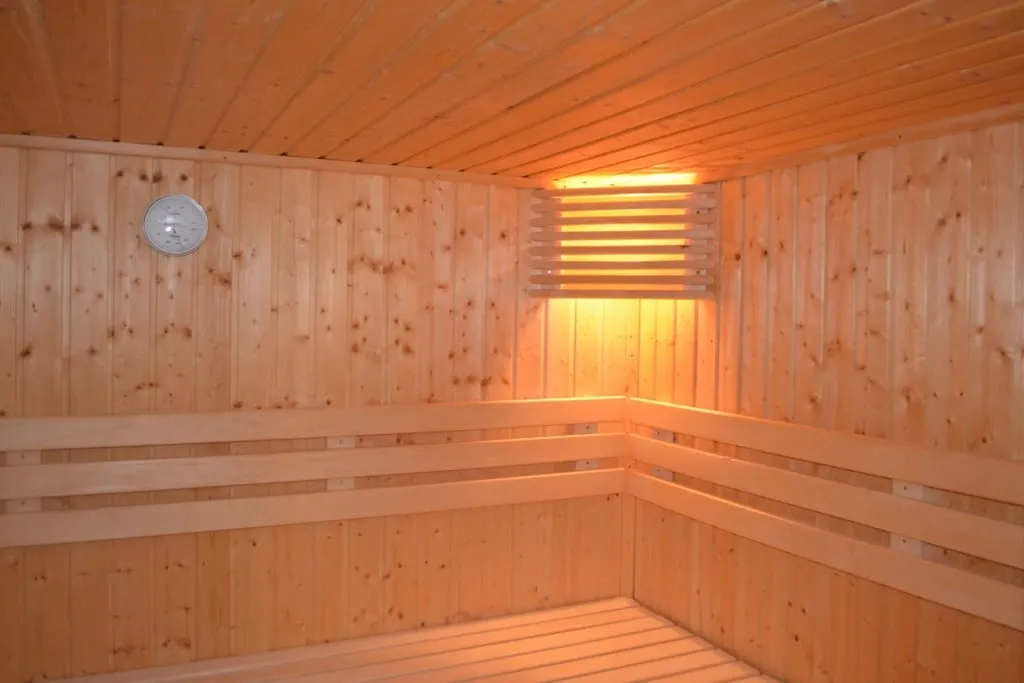
Finnish researchers have followed thousands of middle-aged men for more than two decades and keep finding the same pattern: people who use the sauna more often die less frequently from heart disease and tend to live longer. In the landmark 2015 study, men who bathed 4–7 times per week had roughly half the risk of cardiovascular death compared with those who went once a week. That sounds dramatic — but it is observational data, and it shows an association, not proof that the sauna itself extends life.
What the Finnish studies actually found
The core dataset is the KIHD cohort (Kuopio Ischaemic Heart Disease Risk Factor Study): more than 2,300 middle-aged men from eastern Finland followed for a median of about 20 years. In the analysis by Laukkanen and colleagues, published in JAMA Internal Medicine in 2015, participants were grouped by how often they used the sauna.
The picture was dose-dependent. Compared with those who bathed once a week:
| Sauna frequency | CHD mortality | All CVD mortality | All-cause mortality |
|---|---|---|---|
| 1 time per week | reference | reference | reference |
| 2–3 times per week | ~23% lower | ~27% lower | ~24% lower |
| 4–7 times per week | ~48% lower | ~50% lower | ~40% lower |
A similar gradient appeared with session length: people who spent more than 19 minutes per visit had lower risk than those who left after a few minutes. The same group later published related work: frequent sauna use was associated with a lower risk of stroke (Neurology, 2018), of dementia and Alzheimer's disease (Age and Ageing, 2017), and with lower risk of sudden cardiac death.
A systematic review in Mayo Clinic Proceedings (2018) pulled these findings together and reached a careful conclusion: regular dry sauna bathing is associated with a range of cardiovascular and other benefits, but the quality of evidence is limited by the observational design and the reliance on Finnish populations.
Why it is plausible: the sauna as "passive cardio"
When the body enters heat of 80–100 °C, it mounts a systemic response that resembles moderate exercise in many ways. Skin blood vessels dilate to shed heat, heart rate climbs to 100–150 beats per minute, and cardiac output rises. Hence the metaphor of "passive cardio": the heart works harder even though the person is just sitting.
The key physiological shifts documented in studies:
- Vascular training. Repeated dilation and constriction of blood vessels likely improves endothelial function — the health of the inner lining of the arteries. A healthy endothelium regulates tone better and resists atherosclerosis.
- Lower blood pressure. Blood pressure typically drops after a sauna session, and with regular practice a modest reduction in resting pressure is observed. Hypertension is one of the leading risk factors for heart attack and stroke.
- Arterial stiffness. Some studies report reduced arterial stiffness (pulse wave velocity) after a course of regular sessions.
- Autonomic balance and recovery. Heat followed by cooling influences heart rate variability, and many people use the sauna as a tool for relaxation and stress relief.
One intriguing hypothesis involves heat shock proteins. Heat triggers their synthesis; these proteins help cells cope with stress and fold other proteins correctly. Some researchers link them to the protective effects, but in humans this remains a mechanistic hypothesis rather than a proven pathway.
Читайте также: VO2max and lifespan: why aerobic fitness matters so much
Blood pressure, vessels, and recovery in more detail
The effect on blood pressure is perhaps the most reproducible finding. Systematic reviews note that regular heat exposure is accompanied by a small but consistent reduction in systolic and diastolic pressure. For someone with mild hypertension this can be a pleasant addition to core therapy and lifestyle — but not a replacement for prescribed medication.
It helps to understand the acute physiology. During the session itself, pressure behaves in mixed ways: vessels are dilated, but the heart works harder. A sudden move from the hot room into a cold pool or ice hole is an additional stressor: cold constricts vessels and spikes blood pressure. A healthy heart tolerates this, but for someone with unstable ischemic disease or a serious arrhythmia, contrast procedures raise the risk.
On post-exercise recovery, the evidence is weaker and more mixed. There is some data that heat helps the subjective sense of muscle relaxation and eases tension, but there is little strong evidence that a sauna speeds recovery of strength or reduces muscle damage. It is more reasonable to treat the sauna as a means of psychological decompression and a pleasant habit than as a proven sports-recovery tool.
Читайте также: Blood pressure explained: numbers, measurement, and red flags
The key limitation: this is observational data
Honesty matters here, because sauna has acquired an almost mystical aura as a "longevity elixir." The Finnish studies are cohorts — researchers observed people rather than randomly assigning them to "bathe" and "don't bathe" groups. And observational data always carry a problem: people who use the sauna more may differ in many other ways.
The authors acknowledge this openly and statistically adjust their models for smoking, blood pressure, lipids, diabetes, physical activity, and other factors. The association persists after adjustment, which strengthens the argument. But confounding can never be fully removed in an observational study. Moreover, nearly all of the data come from middle-aged and older Finnish men, in a culture where the sauna is part of everyday life. Extrapolating directly to other populations, to women, and to other formats (infrared cabins, hammam) should be done cautiously — they have not been studied as thoroughly.
A definitive answer to "does the sauna extend life" would require a large randomized controlled trial, but that is hard to run: you cannot easily assign thousands of people to bathe or not bathe for years. So the accurate framing today is this: frequent sauna use is robustly associated with better outcomes, the mechanisms are biologically plausible, but causation is not strictly proven.
Safety: who should be careful, and how not to harm yourself
For most healthy people, the sauna is safe. But heat is a real load, and some conditions call for caution or a doctor's input.
| Situation | What to consider |
|---|---|
| Unstable angina, recent heart attack | High risk; only after cardiology consultation |
| Serious arrhythmias | Heat and dehydration may provoke rhythm disturbances |
| Severe aortic stenosis | Vasodilation against a fixed output is dangerous |
| Low blood pressure, fainting tendency | Risk of pressure drop and dizziness on standing |
| Pregnancy | Overheating in the first trimester is undesirable; limit time and temperature, discuss with a doctor |
| Alcohol use | Sharply raises risk of dehydration, arrhythmia, fainting, and death |
Alcohol and sauna are a dangerous combination. This is not puritanism but physiology: alcohol itself dilates vessels and dehydrates, heat does the same, and together they sharply raise the risk of falling blood pressure, rhythm disturbances, fainting, and drowning in the pool. A significant share of sauna-related deaths in Finland occur with alcohol involved.
Pregnancy. A rise in core body temperature, especially in the first trimester, is potentially undesirable for the fetus. Many guidelines advise pregnant people to limit time and temperature or avoid the sauna — a question to discuss with your care provider.
Hydration. A single session causes a noticeable loss of fluid through sweat. Replace it with water before and after; do not enter the room dehydrated, and do not stay if you feel faint, nauseous, or notice a pounding heartbeat.
What to do
If you are healthy and want to use the sauna sensibly:
- Start gently. 5–10 minutes at a moderate temperature, gradually building to a comfortable 15–20 minutes. Go by how you feel, not by your neighbor's stopwatch.
- Consistency beats heroics. The data point to the benefit of a habit of 2–4 or more sessions a week, not a single extreme visit.
- Drink water before and after; avoid alcohol entirely.
- Be careful with contrast. Sudden cooling is pleasant and invigorating, but with heart disease discuss it with a doctor.
- Do not let the sauna replace movement. It is a pleasant complement to aerobic and strength training, sleep, and nutrition — not a replacement for them.
- With chronic heart disease, pregnancy, or a fainting tendency, talk to a doctor first about a safe routine.
The takeaway is sober and optimistic at once. The Finnish data are among the most interesting in longevity science: a strong dose-dependent association, plausible mechanisms, and reproducibility across several studies. But these are observations, not proof of causation. Treat the sauna as a pleasant and probably beneficial habit within a healthy lifestyle — without inflated expectations that it will replace exercise, sleep, or medical treatment.
FAQ
How often should you use a sauna for heart benefits?+
In the Finnish KIHD cohort, the lowest mortality was seen in people who bathed 4–7 times per week compared with once a week. But this is observational data and does not prove that sauna itself extends life.
Does a sauna replace cardio?+
No. A sauna raises heart rate and loads the cardiovascular system like moderate exercise, but it does not build muscle, strength, or most of the metabolic benefits of training. It is a complement, not a substitute.
Who should be cautious about sauna use?+
Caution is warranted with unstable angina, recent heart attack, serious arrhythmias, and severe aortic stenosis. Pregnant people, those with low blood pressure, and anyone who has been drinking alcohol should be especially careful. With chronic heart disease, discuss your routine with a doctor.
Can you drink alcohol in a sauna?+
No. Alcohol worsens dehydration, dilates blood vessels, and provokes drops in blood pressure, arrhythmias, and fainting. Combining heat and alcohol is one of the most common causes of sauna-related deaths.
References
- 1.Laukkanen T, et al. Association Between Sauna Bathing and Fatal Cardiovascular and All-Cause Mortality Events. JAMA Internal Medicine, 2015
- 2.Laukkanen JA, Laukkanen T, Kunutsor SK. Cardiovascular and Other Health Benefits of Sauna Bathing: A Review of the Evidence. Mayo Clinic Proceedings, 2018
- 3.Kunutsor SK, et al. Sauna bathing reduces the risk of stroke in Finnish men and women. Neurology, 2018
- 4.Laukkanen T, et al. Sauna bathing is inversely associated with dementia and Alzheimer's disease. Age and Ageing, 2017
- 5.Hussain J, Cohen M. Clinical Effects of Regular Dry Sauna Bathing: A Systematic Review. Evidence-Based Complementary and Alternative Medicine, 2018
Read next

Alcohol and Health: Is There a Safe Amount?
Why the 'glass of wine is good for you' finding turned out to be a study artefact, what WHO and Mendelian randomisation show, how alcohol affects the heart, brain, liver and cancer risk.
Stroke: Warning Signs, the FAST Test and Prevention
How to recognise a stroke in under a minute with FAST, why every minute counts, the difference between ischaemic and haemorrhagic stroke, and which risk factors you can actually control.

The Mediterranean Diet: What It Actually Is and How to Build It
The most studied eating pattern in the world: the PREDIMED evidence, what the diet contains, a weekly framework, and how to adapt it to an ordinary supermarket and budget.

Blood Pressure Explained: Numbers, Measuring, Lowering It
What counts as normal blood pressure, AHA/ACC vs ESC categories, how to measure at home correctly, and evidence-based ways to lower it without drugs: DASH, sodium, weight, exercise.
How to Lower Your Biological Age: What Actually Works
You can't reverse the calendar, but the biomarkers behind 'biological age' respond to lifestyle. What genuinely moves them by the evidence — and what's just sold to you.
Autophagy and Fasting: What Is Proven and What Is Hype
What autophagy is, whether fasting really 'cleans your cells' and extends life, and why most of the loud claims about autophagy are not yet proven in humans.