Ultra-Processed Foods: What They Are and Why They Matter
What ultra-processed foods are under the NOVA system, how UPF differs from merely processed food, what the NIH trial showed, and how to spot UPF on the label.
Contents
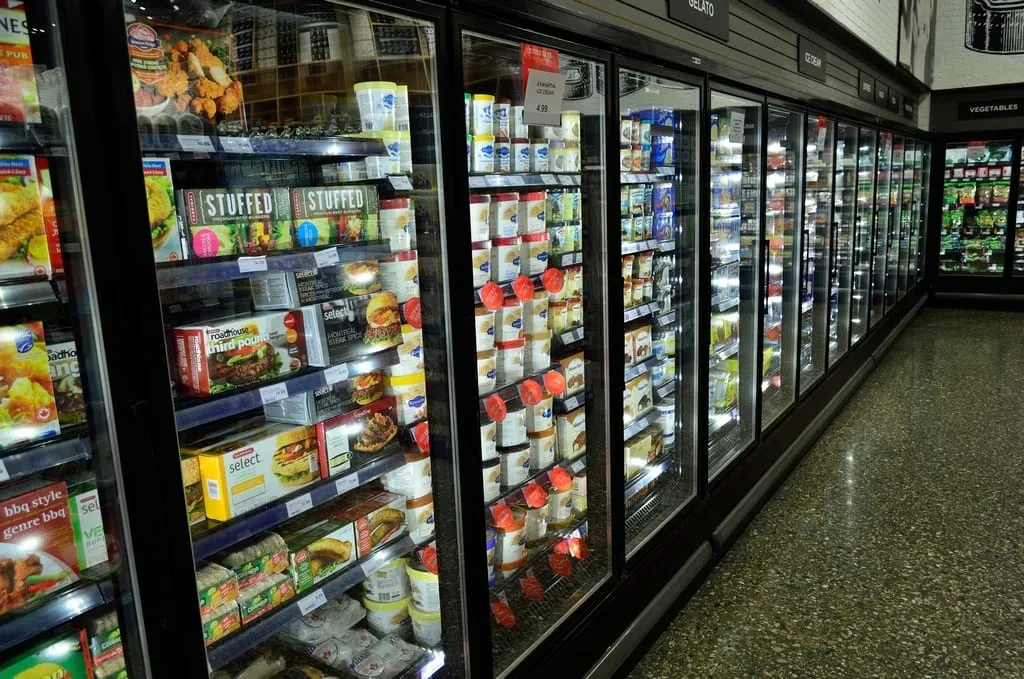
Ultra-processed foods (UPF) are industrial products built mostly from extracted substances and additives you would never find in a home kitchen: protein isolates, modified starch, hydrogenated oils, colors, emulsifiers and flavor enhancers. In the NOVA classification they form group four, the most heavily processed category. What makes them a problem is not one villain ingredient but that they drive you to eat more: in a controlled NIH trial, people on a UPF diet ate about 500 kcal more per day even when the menus were formally matched. The easiest way to spot UPF is the ingredient list — a long one full of industrial-sounding names.
What NOVA is and where the term UPF came from
The term "ultra-processed food" was not invented by marketing but by researchers. In 2009 a group led by Brazilian epidemiologist Carlos Monteiro proposed the NOVA classification, which sorts foods not by their protein, fat and carbohydrate content but by the extent and purpose of industrial processing. The insight was that a nutrient table misses something crucial: the same amount of calories and sugar can come from fundamentally different foods.
NOVA divides everything edible into four groups:
| NOVA group | What it is | Examples |
|---|---|---|
| 1. Unprocessed and minimally processed | Whole foods and simple forms of them: drying, freezing, milling, pasteurizing | Vegetables, fruit, grains, meat, fish, eggs, milk, plain yogurt, nuts |
| 2. Culinary ingredients | Substances extracted from group 1 foods for cooking | Oil, butter, sugar, salt, honey |
| 3. Processed foods | Group 1 foods with group 2 ingredients added | Cheese, sourdough bread, canned goods, salted fish, pickles |
| 4. Ultra-processed (UPF) | Industrial formulations of extracted substances and additives | Soft drinks, sausages, chips, breakfast cereals, snacks, instant noodles |
The first three groups are intuitive. The argument is always about the line between group three and group four — and that line is exactly what defines "ultra-processed."
How UPF differs from merely processed food
The most common misunderstanding is that "processed" means "bad," and "ultra-processed" is the same thing but stronger. In fact the difference is qualitative, not just a matter of degree.
Processed foods (group 3) are recognizable whole foods with salt, sugar or oil added, or preserved by fermentation and canning. Cheese is milk and salt. Sourdough is flour, water, salt and starter. Canned beans are beans, water and salt. You can name every ingredient, and each one exists in an ordinary kitchen.
Ultra-processed foods (group 4) are assembled differently. Their base is not a whole food but substances extracted industrially: protein isolates and hydrolysates, invert and high-fructose corn syrup, modified starch, refined and hydrogenated oils. To these are added substances that exist only to make the product look, smell and keep the "right" way: emulsifiers, stabilizers, flavorings, colors, flavor enhancers, non-caloric sweeteners. Monteiro calls this formulating food rather than cooking it.
A practical marker: if the ingredient list contains even one item you would never keep at home and could not buy as a stand-alone product in an ordinary shop, you are probably looking at UPF.
Читайте также: How to Read Food Labels: Ingredients, Macros and Marketing Tricks
The NIH trial: why UPF makes you eat more
Observational studies always run into the same question: maybe people who eat a lot of UPF simply eat worse overall and move less? To isolate the effect of the food itself you need a controlled experiment. Kevin Hall and colleagues ran one at the US National Institutes of Health, and the results appeared in Cell Metabolism in 2019.
Twenty adults lived in a research center under full control for four weeks. For two weeks they ate an ultra-processed diet and for two weeks a minimally processed one, in alternating order. The key detail: the menus were deliberately matched for presented calories, plus sugar, fat, sodium, fiber and macronutrients. Food was offered in excess — participants ate as much as they wanted, with no restrictions.
The result was striking. On the ultra-processed diet people ate about 500 kcal more per day on average and gained roughly 0.9 kg over two weeks, while on the minimally processed diet they lost about the same amount. Yet participants reported no difference in hunger or in how much they enjoyed the food.
Why this happens is not fully understood, but there are working hypotheses. UPF is usually softer and faster to eat — participants on the UPF diet ate noticeably quicker, and eating speed outruns fullness signals. Such food is energy-dense: many calories in a small volume. Its balance of satiety cues and reward is distorted. And the combinations of salt, sugar, fat and flavoring are tuned to make stopping hard.
This is one small study, and the authors are the first to stress it. But it turns an observational link into a plausible mechanism: UPF does not merely accompany overeating — it promotes it.
What the epidemiology says and what the risks are
Trials like the NIH one show a mechanism over a short window; long-term consequences show up in observational studies of hundreds of thousands of people. Enough of these have accumulated that in 2024 the BMJ published an umbrella review — a meta-analysis of meta-analyses — summarizing links between UPF and nearly forty health outcomes.
The picture is consistent: higher intake of ultra-processed food is associated with higher risk across most outcomes studied.
| Outcome | Direction of association | Strength of evidence |
|---|---|---|
| Cardiovascular mortality | Higher risk | Convincing |
| Type 2 diabetes | Higher risk | Highly suggestive |
| Obesity and overweight | Higher risk | Convincing / high |
| Anxiety and depression (common mental outcomes) | Higher risk | Highly suggestive |
| All-cause mortality | Higher risk | Moderate |
These data need to be read correctly. They are observational: they show a consistent association but do not prove strict causation. People who eat a lot of UPF may differ in other habits, though the authors do adjust for many of them. Even so, the combination of large, reproducible epidemiology with the mechanistic NIH trial makes the conclusion solid enough to take seriously: the share of UPF in the diet is a factor in its own right, not merely a marker of an unhealthy lifestyle.
It is worth noting the mechanisms beyond calories. Some researchers link UPF harm to the effect of emulsifiers and sweeteners on the gut microbiome and the intestinal barrier, and to by-products of industrial processing. This is an active area of research where human data still lag behind the hypotheses.
Читайте также: Gut Microbiome Basics: What It Is and How to Care for It
How to spot UPF on the label
The good news: telling UPF apart does not require memorizing NOVA. You just need to learn to read the ingredient list — it is far more informative than the macro table on the front.
Rule one: length and familiarity. A minimally processed product has a short, understandable ingredient list. The longer the list, and the more words in it that do not exist in your kitchen, the higher the chance it is UPF.
Rule two: look for "markers of formulation." These are ingredients rarely used in home cooking that signal industrial assembly:
- syrups and sugars under many names: high-fructose corn syrup, invert syrup, dextrose, maltodextrin;
- protein isolates, concentrates and hydrolysates, "reconstituted" protein;
- modified starch, refined and hydrogenated (partially hydrogenated) oils;
- emulsifiers and stabilizers: lecithins, polysorbates, mono- and diglycerides of fatty acids, carrageenan, gums;
- flavorings (including "nature-identical"), colors, flavor enhancers, non-caloric sweeteners.
Rule three: check what comes first. Ingredients are listed in descending order of weight. If a product opens with sugar, syrup, refined flour or vegetable oil, and the actual "food" is somewhere near the end, it is UPF.
A word on the "healthy" UPF trap. Plant-based "sausages," protein bars, ready-made smoothies, gluten-free baked goods, "vitamin-fortified" cereals and "no added sugar" yogurt desserts are often full UPF with different marketing. "High in protein" and "fortified with vitamins" on the front say nothing about the degree of processing; the answer is always in the ingredient list.
Читайте также: Sugar: How Much per Day and What Counts as Added
A realistic approach without fanaticism
It is easy to turn UPF into a new food phobia, and that would be a mistake. No single product makes you ill on its own, and a fully "clean" diet of only unprocessed food is out of reach for most people in terms of money, time and circumstances. The NOVA classification is a tool for shifting the proportions of your diet, not a list of forbidden foods.
A sensible strategy rests on a few principles.
Think in proportions, not bans. What matters is what forms the base of your diet day after day, not the occasional bag of chips. If 80–90% of your energy comes from whole and minimally processed food, the remaining share of UPF makes little difference.
Start with drinks. Soft drinks and energy drinks are the purest example of UPF: lots of calories, zero satiety. Replacing them with water, tea or unsweetened coffee usually gives the biggest effect for the least effort.
Swap a few daily items, not your whole diet. A ready sweet breakfast, an afternoon snack and an evening UPF dessert repeat every day. Replacing exactly these recurring items with whole alternatives solves most of the problem.
Do not confuse convenience with necessity. We eat much UPF not because we love it but because it is quick. Keeping a small stock of simple food on hand — fruit, nuts, yogurt, eggs, sourdough bread — removes most of the spontaneous decisions in favor of a package.
What to do in practice
- Once, read the ingredient list of five products you buy every week and identify the UPF among them by list length and "markers of formulation."
- Replace one ultra-processed drink a day with water, tea or unsweetened coffee — that is often the very extra hundred or two hundred calories.
- Keep simple snacks on hand: fruit, nuts, plain yogurt, eggs. That way the spontaneous choice more often lands on whole food.
- Build your plate around NOVA group 1–3 foods: vegetables, grains, legumes, meat, fish, eggs, plain dairy, cheese, sourdough bread.
- Treat the remaining UPF calmly: it is fine as an addition. What matters is the base of the diet, not any single package.
The core message here is not that ultra-processed food is "poison," but that it is engineered to be easy to overeat, and that its share of your diet is a factor you can manage in its own right. You do not need to memorize NOVA and you do not need to declare war on the supermarket. It is enough to read the ingredient list and make sure real food forms the foundation of your plate.
FAQ
What are ultra-processed foods in simple terms?+
They are industrial products assembled mostly from extracted substances and additives you would never find in a home kitchen: protein isolates, modified starch, hydrogenated oils, colors, emulsifiers and flavor enhancers. In the NOVA system they form group four, the most heavily processed category. Typical examples are soft drinks, packaged snacks, sausages, breakfast cereals and instant noodles.
How do ultra-processed foods differ from processed foods?+
Processed foods are recognizable whole foods with added salt, sugar or oil: cheese, canned beans, sourdough bread, salted fish. Ultra-processed foods are built from industrial fractions and contain little of the original whole food. The distinction is about the nature of the ingredients, not the number of processing steps.
What did the NIH study on ultra-processed food show?+
In a tightly controlled trial by Hall and colleagues (2019), people on an ultra-processed diet ate about 500 kcal more per day and gained weight, even though both menus were matched for calories, sugar, fat, sodium and fiber. The extra intake came from the type of food itself, not from its nutrient profile.
Do I need to cut ultra-processed food out completely?+
No, a total ban is neither realistic nor necessary. The sensible goal is to make whole and minimally processed foods the base of your diet, with UPF as an addition rather than the foundation. The easiest place to start is drinks and snacks, which supply most of the hidden calories.
References
- 1.Hall KD et al. Ultra-Processed Diets Cause Excess Calorie Intake and Weight Gain. Cell Metabolism, 2019
- 2.Monteiro CA et al. Ultra-processed foods: what they are and how to identify them. Public Health Nutrition, 2019
- 3.Lane MM et al. Ultra-processed food exposure and adverse health outcomes: umbrella review of epidemiological meta-analyses. BMJ, 2024
- 4.Monteiro CA et al. NOVA. The star shines bright. World Nutrition, 2016
- 5.WHO. Healthy diet — fact sheet
Read next
Sugar: How Much Is Too Much and What Counts as Added
The WHO and AHA limits on added sugar in grams, what counts as added sugar, where it hides in everyday groceries, and how to cut back without suffering.
How Many Eggs a Day: Cholesterol, Benefits and Real Risks
Do eggs raise cholesterol, how many you can eat without harming your heart, what eggs are good for, and whether there are special caveats for people with diabetes.
Plant vs Animal Protein: What the Difference Means in Practice
How plant protein differs from animal protein in quality and digestion, whether you need to 'combine' sources, what is better for muscle and what for health and longevity.
The Mediterranean Diet: What It Actually Is and How to Build It
The most studied eating pattern in the world: the PREDIMED evidence, what the diet contains, a weekly framework, and how to adapt it to an ordinary supermarket and budget.
Artificial Sweeteners: Harmful or Helpful — What the Research Says
Aspartame, stevia, erythritol and sucralose examined: what the 2023 WHO guideline actually said, whether there is real cardiovascular or gut risk, and when sweeteners make sense.
Calcium: How Much You Need and How to Get It Without Dairy
Calcium requirements by age, the best dairy and plant sources, why vitamin D and protein matter, and who actually needs a supplement rather than taking one just in case.