Iron and Ferritin: When Supplements Help and When They Harm
Iron deficiency starts long before anaemia, ferritin drops first and lies during inflammation, and iron taken without testing can do real damage.

Contents
Iron deficiency begins long before haemoglobin drops, and ferritin is the first marker to fall, which is why a normal full blood count proves nothing on its own. Ferritin has one big catch: it is an acute phase protein, so any inflammation pushes it up and makes a real deficiency look normal, which is why it is read together with CRP. And the part that matters most: iron is not a supplement to take speculatively, because the body cannot excrete the excess and because accidental overdose of iron products is still a leading cause of fatal poisoning in young children.
Deficiency and anaemia are not the same thing
The most common misreading of a blood test goes like this: haemoglobin is normal, therefore iron is fine. It is not. Iron deficiency develops in stages, and anaemia is only the last one.
An adult body holds roughly 3 to 4 grams of iron. Most of it sits in haemoglobin, a good share in muscle myoglobin, and the rest is stored as ferritin and haemosiderin in the liver, spleen and bone marrow. That store is the buffer the body spends first when intake stops covering losses.
Hence three stages:
- Store depletion. Ferritin falls and marrow iron drops. Haemoglobin is still normal, but symptoms may already be present: fatigue, poor exercise tolerance, hair shedding, brittle nails, trouble concentrating, sometimes restless legs.
- Iron deficient erythropoiesis. The store is gone and transport iron runs short. Transferrin and total iron binding capacity rise, transferrin saturation falls. Haemoglobin may still scrape the bottom of the reference range.
- Iron deficiency anaemia. Haemoglobin finally drops and red cells become small and pale, with low MCV and MCH.
The practical consequence is that there is a long window between "everything is fine" and "anaemia" during which someone feels genuinely unwell and a routine full blood count shows nothing. You catch that window with ferritin, not with haemoglobin.
Ferritin: the best marker, and its trap
Serum ferritin is the most efficient and cost effective test for diagnosing iron deficiency, because it reflects the size of the store and drops during the very first stage of depletion. The 2021 British Society of Gastroenterology guideline calls it the single most useful marker of iron deficiency anaemia.
And that is exactly where the trap sits. Ferritin is also an acute phase protein. It rises with infection, active inflammation, autoimmune disease, obesity, fatty liver, heavy alcohol use and malignancy. In a person with inflammation, a ferritin of 60 mcg/L may not mean "adequate stores" — it may mean "empty stores plus inflammation".
| Situation | Ferritin threshold | Interpretation |
|---|---|---|
| Adults, no inflammation | below 15 mcg/L | Iron deficiency by WHO criteria |
| Adults, no inflammation | 15–30 mcg/L | Low stores; most laboratory lower limits sit in this band |
| Children under 5, no inflammation | below 12 mcg/L | Iron deficiency |
| Adults with infection or inflammation | below 70 mcg/L | May indicate deficiency — threshold raised |
| Children with infection or inflammation | below 30 mcg/L | May indicate deficiency — threshold raised |
| Menstruating women | above 150 mcg/L | Possible risk of iron overload; needs evaluation |
| Men and non-menstruating women | above 200 mcg/L | Possible risk of iron overload; needs evaluation |
| Adults with other pathology | above 500 mcg/L | Warrants a specific work-up |
One caveat in the other direction: a high ferritin is not a diagnosis of iron overload. WHO explicitly says ferritin should never be used alone to identify overload, because inflammation, obesity, fatty liver disease and alcohol explain far more high results than haemochromatosis does. A raised ferritin is a reason to investigate, not a reason to start donating blood.
Who is most likely to run low
Iron is lost with blood, so the risk groups are the people who lose blood regularly and the people who replace it poorly.
- Menstruating women. Heavy or prolonged periods are the leading cause of deficiency in this group. The RDA for women aged 19 to 50 is 18 mg a day, against 8 mg for men of the same age.
- Pregnancy. Requirements rise to 27 mg a day to cover expanded blood volume, the placenta and the fetus.
- Vegetarians and vegans. Their requirement is set 1.8 times higher, because non-haem iron from plants is far less bioavailable.
- Blood donors. Every donation removes roughly 200 to 250 mg of iron, and frequent donors often do not rebuild stores between sessions.
- Endurance athletes. Losses through sweat and urine, foot-strike capillary damage in runners, higher turnover and frequently under-fuelled diets all stack up.
- Infants, toddlers and adolescents. Rapid growth and expanding blood volume, plus the onset of menstruation in teenage girls.
- People with gut disease. Coeliac disease is found in 3–5% of iron deficiency anaemia cases; inflammatory bowel disease, gastric surgery, Helicobacter pylori, long-term NSAIDs and proton pump inhibitors all contribute.
Читайте также: How Much Protein Do You Need Per Day?
New deficiency in men and postmenopausal women is a red flag
This is the part that must not be skipped, and it matters more than which brand of tablet you buy.
In a woman of reproductive age, iron deficiency usually has an obvious explanation: menstrual loss. In a man, or in a woman past menopause, there is no physiological route for losing blood. The iron is going somewhere — and most often it is going into the gastrointestinal tract.
In young women the picture is gentler: significant gut pathology is uncommon, and after coeliac screening, further investigation is warranted only if there are additional concerning features. Confirmed deficiency in young men is rare, but when it occurs it deserves the same work-up as in older adults.
Haem and non-haem iron
Dietary iron comes in two forms. Haem iron is found in meat, poultry and seafood, absorbs well, and is relatively indifferent to what you eat alongside it. Non-haem iron is present in plants, fortified foods and also in meat; it absorbs poorly and is highly sensitive to the rest of the meal.
Overall bioavailability is around 14–18% from a mixed diet containing meat, seafood and vitamin C, and 5–12% from vegetarian diets. That gap is exactly why the vegetarian requirement carries a 1.8 multiplier.
| Food | Iron per serving | Form |
|---|---|---|
| Breakfast cereal fortified to 100% DV, 1 serving | 18 mg | Non-haem |
| Oysters, cooked, 3 oz | 8 mg | Haem |
| White beans, canned, 1 cup | 8 mg | Non-haem |
| Beef liver, pan fried, 3 oz | 5 mg | Haem |
| Lentils, boiled, 1/2 cup | 3 mg | Non-haem |
| Spinach, boiled, 1/2 cup | 3 mg | Non-haem, poorly absorbed |
| Tofu, firm, 1/2 cup | 3 mg | Non-haem |
| Kidney beans, canned, 1/2 cup | 2 mg | Non-haem |
| Sardines with bones, 3 oz | 2 mg | Haem |
| Chickpeas, boiled, 1/2 cup | 2 mg | Non-haem |
| Beef, braised bottom round, 3 oz | 2 mg | Haem |
| Cashews, oil roasted, 1 oz | 2 mg | Non-haem |
| Chicken with skin, roasted, 3 oz | 1 mg | Haem |
| Egg, hard boiled, 1 large | 1 mg | Non-haem |
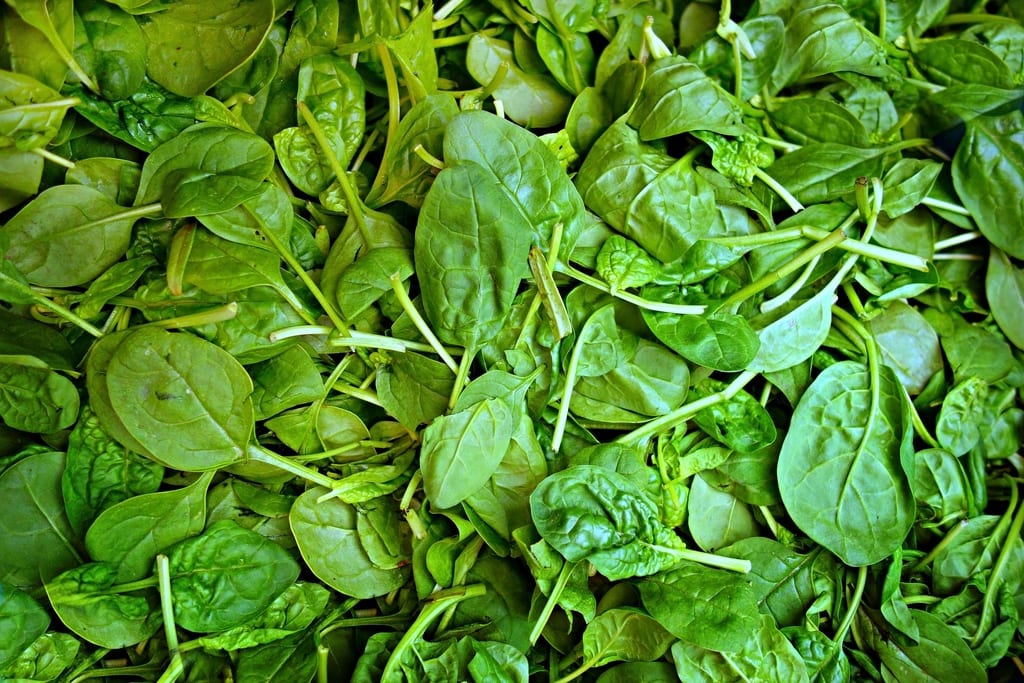
Spinach deserves a note. Popular culture made it the iron food, but its iron is non-haem and it comes packaged with polyphenols and oxalates that bind it, so real-world bioavailability is low. Red meat, liver, shellfish, and legumes eaten with a vitamin C source do far more for your ferritin.
What helps and what blocks absorption
These effects are real and well characterised for non-haem iron, although a typical Western diet blunts them somewhat.
Absorption enhancers:
- Ascorbic acid, by a wide margin the strongest. Peppers, citrus, kiwi, berries, sauerkraut — or, with a supplement, a glass of orange juice or 100–200 mg of vitamin C.
- Meat, poultry and fish, which enhance non-haem iron absorption from plant foods eaten in the same meal.
- Soaking, sprouting and fermenting grains and legumes, which break down some of the phytate.
Absorption inhibitors:
- Phytate in whole grains, bran and legumes.
- Polyphenols in tea, coffee, cocoa and red wine. A mug of black tea with a meal measurably cuts iron uptake, so separate them by an hour or more.
- Calcium, the one inhibitor that interferes with both non-haem and haem iron. Take dairy and calcium supplements away from iron.
- Reduced stomach acid. Proton pump inhibitors reduce non-haem iron absorption. In people with normal stores, even a decade of PPI use is not associated with iron depletion, but someone who is already deficient may respond poorly to oral iron while taking them.
Читайте также: Magnesium: Forms, Doses and Who Needs It
How to take iron: the change of the last decade
The traditional advice — a tablet two or three times a day — turned out to be worse than the alternative, and the reason is a hormone called hepcidin.
Hepcidin is the master regulator of iron metabolism. Made in the liver, it blocks the export of iron from intestinal cells into the bloodstream. Every dose of iron raises hepcidin, and the rise lasts around 24 hours. A second tablet later the same day, or a tablet the next morning, arrives at a gate that is already closed.
The BSG guideline recommends starting with one tablet a day of ferrous sulphate, fumarate or gluconate, and switching to one tablet every other day if that is not tolerated. Response is checked at four weeks; a haemoglobin rise of 10 g/L or more within two weeks is considered a good answer. Treatment then continues for about three months after haemoglobin normalises, in order to refill the stores rather than just fix the number. The logic is that haemoglobin recovers faster than ferritin, so stopping the moment the count looks fine guarantees a relapse.
Side effects and how to reduce them
Doses of 45 mg of elemental iron a day and above frequently cause gastrointestinal effects: nausea, abdominal discomfort, constipation, sometimes diarrhoea. Stools turn dark in almost everyone, which is expected and not a sign of bleeding.
What helps:
- Move to alternate day dosing. Tolerability improves and absorption does not suffer.
- Reduce the single dose instead of abandoning treatment altogether.
- Take it with a small amount of food if fasting is intolerable. Absorption drops a little, but consistency matters more than perfection.
- Ask about gentler preparations: amino acid chelates, polysaccharide-iron complexes and carbonyl iron tend to cause fewer GI effects than ferrous salts.
- If oral iron fails or cannot be tolerated, intravenous iron is an option — a clinical decision, not a self-directed one.
Why "just in case" is the wrong approach to iron
Iron differs from most vitamins in one decisive way: humans have no active route for excreting it. Only absorption is regulated. Whatever gets in beyond need is deposited in tissue — liver, heart, pancreas, joints.
The Tolerable Upper Intake Level for iron is 45 mg a day for adults and 40 mg for children up to 13. That figure applies to people without deficiency; therapeutic doses for confirmed anaemia are higher and are prescribed. Overload from food alone is essentially unheard of in people with normal gut function — it is supplements and prescriptions that create the risk.
A word on iron and tiredness. The 2016 Cochrane review of daily iron supplementation in menstruating women pooled 67 trials and 8,506 participants and confirmed that iron reliably reduces the risk of anaemia and raises haemoglobin. That is evidence about correcting a deficiency, not about boosting energy in people who have adequate stores. If your ferritin is normal, iron will not make you feel sharper.
What to actually do
- If you have fatigue, breathlessness on exertion, hair shedding or falling exercise tolerance, get a full blood count, ferritin and CRP. Ferritin without CRP cannot be interpreted safely.
- If ferritin is low-ish and CRP is raised, add transferrin saturation before drawing conclusions.
- Do not start iron before testing, and do not keep taking it indefinitely without follow-up.
- Men and postmenopausal women with newly found deficiency need a GI work-up, including cancer investigation, plus coeliac screening.
- Take one dose in the morning on an empty stomach, every other day, with vitamin C, away from tea, coffee, milk and calcium.
- Reassess at four weeks and continue for around three months after haemoglobin normalises to refill the store.
- Keep iron tablets locked away from children. This is not a formality.
Iron is one of the few nutrients where speculative supplementation carries real, measurable harm. Deficiency is worth hunting for and worth treating properly — but it starts with a blood test, not with a purchase.
Читайте также: Fiber: How Much You Need and Where to Get It
FAQ
What is the difference between iron deficiency and iron deficiency anaemia?+
They are consecutive stages of the same process. Stored iron is spent first, so ferritin falls while haemoglobin is still normal. Anaemia appears only later, once there is not enough iron left to build red blood cells. A normal haemoglobin does not rule out iron deficiency.
What ferritin level counts as low?+
WHO defines iron deficiency as ferritin below 15 mcg/L in adults and below 12 mcg/L in children under five. British gastroenterology guidance adds that ferritin under 30 mcg/L already indicates low body iron stores, which is why laboratory lower limits sit somewhere between 15 and 30 mcg/L.
Why can ferritin look normal in someone who is iron deficient?+
Ferritin is an acute phase protein. Infection, obesity, liver disease, autoimmune conditions and cancer raise it independently of iron stores and can hide a deficiency. That is why it should be measured alongside CRP, and why WHO raises the deficiency threshold to 70 mcg/L in adults with inflammation.
What is the best way to take an iron supplement?+
One dose in the morning on an empty stomach, every other day. Each dose raises the hormone hepcidin for roughly 24 hours, which blocks absorption of the next one, so alternate day dosing beats splitting the dose across the day.
Can I take iron just in case, without testing?+
No. The body has no way to excrete excess iron, so the surplus accumulates in the liver, heart and pancreas. In hereditary haemochromatosis that is directly dangerous, and in young children accidental overdose of iron products remains a leading cause of fatal medication poisoning.
Will iron fix fatigue if my blood tests are normal?+
Probably not. Cochrane evidence supports iron for confirmed deficiency and anaemia, but if your ferritin is normal there is no reason to expect an energy boost, and fatigue usually has another explanation.
References
- 1.NIH Office of Dietary Supplements. Iron — Health Professional Fact Sheet
- 2.WHO guideline on use of ferritin concentrations to assess iron status in individuals and populations. Geneva: World Health Organization, 2020
- 3.Stoffel NU, Cercamondi CI, Brittenham G et al. Iron absorption from oral iron supplements given on consecutive versus alternate days and as single morning doses versus twice-daily split dosing in iron-depleted women. Lancet Haematol, 2017
- 4.Stoffel NU, Zeder C, Brittenham GM, Moretti D, Zimmermann MB. Iron absorption from supplements is greater with alternate day than with consecutive day dosing in iron-deficient anemic women. Haematologica, 2020
- 5.Snook J, Bhala N, Beales ILP et al. British Society of Gastroenterology guidelines for the management of iron deficiency anaemia in adults. Gut, 2021
- 6.Low MS, Speedy J, Styles CE, De-Regil LM, Pasricha SR. Daily iron supplementation for improving anaemia, iron status and health in menstruating women. Cochrane Database Syst Rev, 2016
Read next
Iron and Women's Health: Deficiency and Ferritin
Why women are at higher risk of iron deficiency, how to read ferritin, heme vs non-heme iron, how vitamin C and coffee affect absorption, and when supplements make sense.

Vitamin B12: Who Needs It, Deficiency Signs, How to Take It
Who actually needs vitamin B12, how to spot deficiency by symptoms and tests (B12, homocysteine, MMA), and which forms and doses to choose. A guide for vegans and at-risk groups.

Vitamin D: Doses, Blood Levels and Who Actually Needs It
How to read a 25(OH)D result, which doses work for prevention and for correcting deficiency, who should be tested, and where the overdose risk begins.

Do Multivitamins Do Anything for Healthy People?
The USPSTF and large trials found no benefit of multivitamins for healthy adults. Who genuinely needs supplements, and where upper limits actually bite.
Ashwagandha: What the Research Says About Stress, Sleep and Strength
Ashwagandha is a popular adaptogen. What studies actually show about its effect on stress, anxiety and sleep, where the evidence is weaker, and who should avoid it.
Curcumin and Turmeric: Does the Supplement Work, and For What?
How curcumin differs from the turmeric spice, why it is poorly absorbed, which conditions have evidence of benefit (and which only promises), and what about safety.